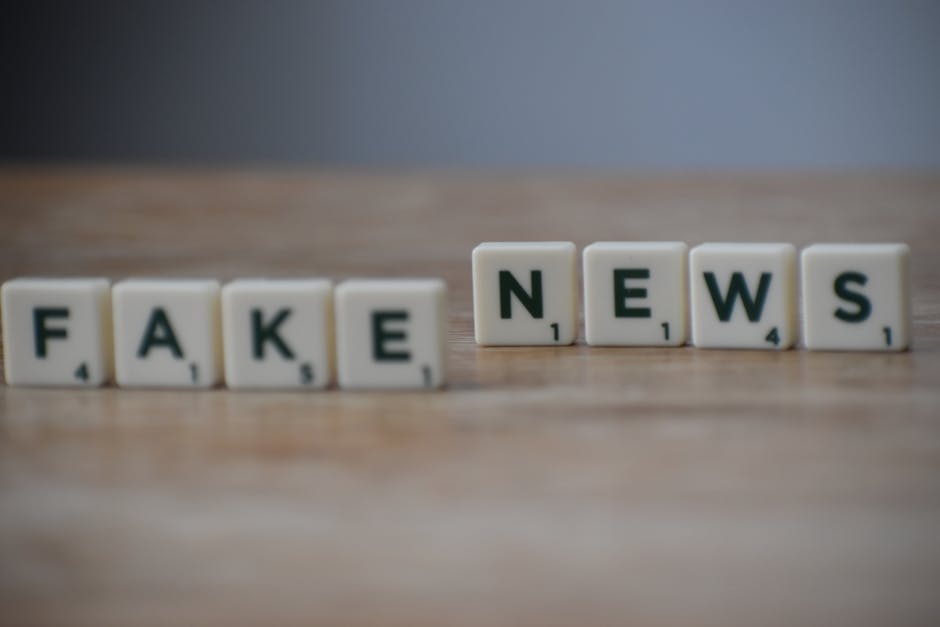
Stop Getting Fooled: How to Spot Fake News Online
I'm going to say something that might piss some people off: if you're still sharing obvious fake news in 2025, you're either lazy or you just don't care. And I'm not talking about the funny stuff your uncle posts on Facebook. I'm talking about the articles designed to make you angry, scared, or smugly righteous.
Let's get one thing straight right now. Fake news isn't just about politics. It's about health scams, miracle cures, investment schemes, and celebrity death hoaxes. It's everywhere.
The worst part? The people making this junk are getting really good at it. They know exactly which buttons to push. And they're counting on you to hit the share button before you think.
**Check the Headline First**
Here's a trick that works almost every time. Read the headline out loud. If it sounds like something a carnival barker would shout to get you to step right up, it's probably fake.
Real headlines are boring. They say things like "City Council Delays Vote on Parking Ordinance." They don't say "YOU WON'T BELIEVE WHAT THIS CITY COUNCIL DID."
I've seen headlines that literally made me laugh out loud because they were so ridiculous. But then I checked the comments, and people were actually arguing about them. Grown adults, fighting over something that was made up by a guy in his basement.
If the headline makes you feel a strong emotion—rage, fear, or gleeful superiority—that's a red flag. The people who write fake news want you emotional because emotional people don't fact-check. They just share.
**Where's the Article Actually From?**
This is the big one. Most people never look past the domain name. They see something on Facebook or Twitter, it looks like a news site, and boom—they share it.
But here's the thing. Anyone can buy a domain name for twelve bucks. Anyone can make it look like CNN or BBC. I've seen sites that use the exact same logo as a real news network, just with one letter changed.
Take two seconds. Actually look at the URL. Is it cnn.com or cnn-breaking-news-2025.xyz? If the domain ends in .xyz, .club, or .info, and it's pretending to be news, you should be suspicious.
And don't get me started on sites that look like legitimate local news outlets but are actually run by foreign propaganda operations. They copy the formatting, the fonts, everything. But the stories are complete fiction designed to divide people.
**Who Wrote It?**
Real news articles have bylines. They say "By John Smith." Fake news articles often have no author at all, or they use a fake name like "Staff Reporter" or "News Team."
Do a quick search for the author's name. If they don't exist anywhere else, that's a problem. If every article they've "written" is about the same controversial topic, that's also a problem.
I once found an article attributed to a woman who supposedly had a PhD in something. I looked her up. The only thing she had a PhD in was making up stories for fake news sites. There was no university, no published research, nothing.
**Check If Anyone Else Is Reporting It**
This is the simplest test. If something huge happened, you should be able to find it on at least three legitimate news sites. Not blogs. Not opinion sites. Actual news outlets.
If only one site is reporting it, especially if that site looks sketchy, it's either fake or wildly exaggerated.
I saw this happen with a story about a celebrity saying something outrageous. It was on one site. Just one. But people shared it like it was gospel. Turned out the site had fabricated the entire quote. The celebrity never said it. But by the time the truth came out, the damage was done.
**Look for Dates and Updates**
Old news gets recycled all the time. Someone will find an article from 2015, change the headline to make it sound current, and repost it. People see it, think it's new, and get outraged about something that was resolved years ago.
Check the date. Check if the article has been updated. And look for timestamps that make no sense. Like an article about a political event that was "published" six months before the event actually happened.
**The Photo Test**
Images are easy to fake. Google Image Search is your friend. Right-click the image and search for it. If it shows up on a dozen different articles about completely different things, someone reused a photo to support a fake story.
I've seen photos of protests from one country being used to illustrate stories about protests in another country. I've seen stock photos of actors pretending to be doctors used to sell fake health products.
If the image looks too perfect, too dramatic, or too emotionally manipulative, be suspicious.
**Read Past the First Paragraph**
This sounds obvious, but most people don't do it. They read the headline, maybe the first sentence, and then share.
Fake news articles often start with something that sounds reasonable, then go completely off the rails in the middle. Or they bury the part where they admit they're making stuff up.
I read one article that started with a factual event, then spent the rest of the article making wild claims about secret societies. The first paragraph was true. The rest was garbage. But most people never got past the first paragraph.
**Follow the Money**
Who benefits from you believing this? That's the question nobody asks.
Some fake news is designed to get clicks for ad revenue. Some is designed to push a political agenda. Some is designed to sell you something.
If an article is trying to make you afraid of a vaccine, check who wrote it. Check who funded the study they're citing. Check if the person making the claim has a financial interest in you being scared.
I'm not saying everyone with an agenda is lying. I'm saying you should know what their agenda is before you believe them.
**The Gut Check**
Here's the most important thing. If something makes you feel smart for believing it, or superior to people who don't, or righteous for sharing it, stop and think.
The internet is full of things designed to make you feel good about your existing beliefs while making you angry at people who disagree with you. That's not news. That's entertainment at best, manipulation at worst.
Fake news preys on confirmation bias. We all want to believe things that make us look good and make our enemies look bad. That's human nature. But giving in to it makes you part of the problem.
**My Prediction**
Fake news isn't going away. It's getting more sophisticated. AI can now generate articles, images, and even videos that look real. In a few years, it will be nearly impossible to tell what's real and what's not without serious effort.
The only defense is skepticism. Not cynicism—skepticism. Question everything, but don't dismiss everything. Verify before you share. And for God's sake, stop arguing about articles you haven't actually read.
Or keep sharing fake news. That's your choice. But don't complain when nobody trusts anything you say anymore.
💬 Comments