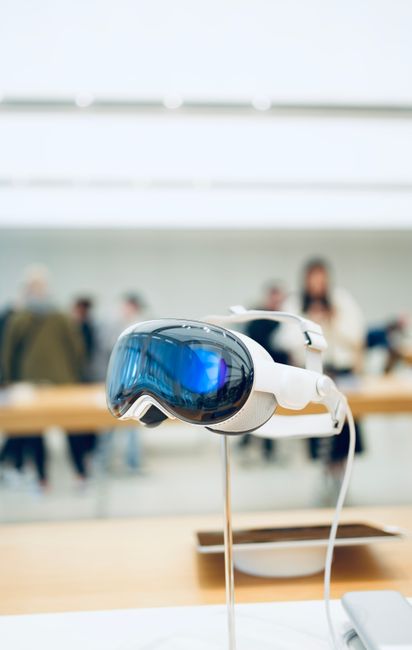
Apple Vision Pro Sales Figures: A Reality Check for Spatial Computing
In February 2024, Apple’s Vision Pro arrived in stores with the kind of fanfare reserved for truly ambitious products: a $3,499 price tag, a brand-new computing paradigm, and the full force of Apple’s ecosystem behind it. By early 2025, the narrative had shifted from hype to hard numbers. Sales figures for the first year of availability suggest a mixed reality: the Vision Pro is not a failure, but it is far from a mainstream hit. Understanding where it stands requires looking beyond the raw unit counts and into the context of production, demand, and Apple’s long-term strategy.
First, the numbers themselves. Multiple supply chain reports from firms like IDC and TrendForce estimated that Apple shipped between 400,000 and 500,000 units in the device’s first twelve months. For a product priced at $3,499, that translates to roughly $1.4 to $1.75 billion in revenue. In a vacuum, that is a significant sum—many consumer electronics companies would celebrate such a launch. But for Apple, which generated over $383 billion in total revenue in its 2024 fiscal year, the Vision Pro’s contribution remains a footnote. The more telling metric is the comparison to initial expectations. Before launch, some analysts predicted shipments of 1 to 2 million units in the first year. The actual figure is roughly half the low end of those estimates. This shortfall stems from a combination of factors: the prohibitive price, the niche appeal of spatial computing, and limited third-party software support.
Why did the Vision Pro sell fewer units than anticipated? Three primary reasons emerge. The first is the price. At $3,499, the device costs more than a MacBook Pro, an iPad Pro, and an iPhone Pro combined. This immediately excludes most consumers, even those who are passionate about Apple’s ecosystem. The second reason is the lack of a clear, everyday use case. Early adopters praised the device for immersive media consumption and niche productivity tasks, such as using multiple virtual monitors. However, the broader public struggled to justify the cost for activities they could perform on existing devices. Third, the software ecosystem grew slowly. While Apple released a developer kit and showcased impressive demos, the number of native VisionOS apps remained modest throughout 2024. Many major developers opted to build for the wider audience of mobile and desktop platforms rather than a device with a small user base. This chicken-and-egg problem limited the Vision Pro’s appeal: few apps meant fewer reasons to buy, and fewer buyers meant little incentive for developers.
The geographic distribution of sales also tells a revealing story. The Vision Pro launched exclusively in the United States in February 2024, then expanded to countries like Canada, the United Kingdom, Japan, and China by mid-summer. According to regional sales data from market analysts, the U.S. accounted for roughly 60% of all units sold in the first year. The Asia-Pacific region, particularly China and Japan, made up about 25%, with Europe trailing behind. This skew is not surprising: the U.S. is Apple’s largest market and the one where early adopters with high disposable income are most concentrated. However, the slower uptake in Europe and Asia suggests that the Vision Pro’s appeal is not universal. Factors such as local content availability, pricing after taxes and import duties, and cultural familiarity with head-mounted displays all play a role. For instance, in China, where companies like ByteDance (through Pico) and Tencent have invested in VR/AR ecosystems, the Vision Pro faced stiff competition from lower-cost alternatives.
Perhaps the most significant implication of the Vision Pro’s sales figures is what they reveal about Apple’s product strategy. Historically, Apple has launched devices that start as niche products and then expand to mass markets—the iPod, iPhone, and Apple Watch all followed this trajectory. The Vision Pro is different. It is not simply a first-generation product with rough edges; it is a high-end luxury item meant to establish a foundation for future, cheaper versions. Reports from Bloomberg and The Information indicate that Apple is already working on a lower-cost headset, expected to launch as early as 2026, with a target price between $1,500 and $2,000. The company also intends to sell a second-generation Vision Pro with improvements in weight, battery life, and display technology. The initial sales figures, while lower than hoped, provide Apple with a clear signal: the market for a $3,499 spatial computer is real but small. The real test will come when the price drops and the software matures.
Looking ahead, the Vision Pro’s future depends on three variables. First, Apple must reduce the cost of the hardware, likely through simpler components and economies of scale. Second, the company needs to foster a vibrant software ecosystem that includes not just entertainment but also productivity, education, and social interaction. Third, Apple must convince consumers that spatial computing is a meaningful improvement over current devices. The sales figures from 2024-2025 are not a verdict; they are a baseline. If Apple can iterate on this foundation, the Vision Pro may yet become a significant product line. If not, it will join the ranks of ambitious but commercially unsuccessful experiments—a reminder that even the world’s most valuable company cannot simply will a new category into existence.
💬 Comments