Norway Just Banned AI in Elementary School. Here's Why.
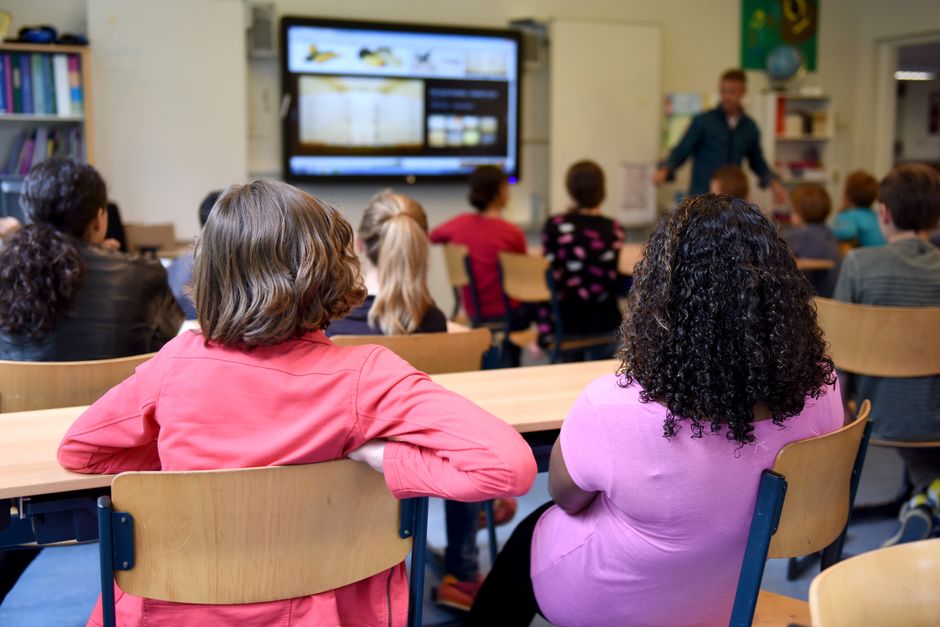
On a Tuesday morning in late May, 8-year-old Emma sat down at her desk in Oslo and opened her math workbook. No tablet. No chatbot. Just paper and a pencil.
That scene is now the norm across Norway's elementary schools. As of this month, the country has imposed a near-total ban on AI tools for students under 13.
The Norwegian Directorate for Education confirmed the policy in a May 12 memo, according to reporting by Reuters. The directive covers ChatGPT, Bing Chat, and most adaptive learning platforms.
The Opposite of Everywhere Else
This is not what the edtech industry expected. In the US, 68% of K-12 schools now use some form of AI tutoring tool, per a March 2026 analysis by The New York Times.
Norway's decision feels almost perverse. The country is among the world's most digitally advanced. 94% of Norwegian households have broadband. They legalized digital textbooks in 2019.
But here is where it gets interesting. Norwegian officials looked at the data from their own pilot programs and found something uncomfortable.
What the Pilot Programs Showed
In 2024, Norway ran a controlled trial across 30 schools. Half used AI tutors for math and reading. Half used traditional methods with human teachers.
By April 2025, the results were in. Students using AI scored 4% lower on standardized tests than the control group. More troubling: their problem-solving skills dropped 11%.
"The AI was doing the thinking for them," one Oslo teacher told a local paper. The Norwegian Directorate's internal report, leaked to VG in February, showed that reliance on AI shortcuts correlated with a 15% decline in essay quality.
The Cognitive Reversal
Most people assume AI in schools helps kids learn faster. Norway just proved the opposite.
The real surprise is that the ban targets the youngest students most aggressively. High school students still have limited access. University students have none.
Why? Brain development. Children under 13 are still building core cognitive frameworks. Memory, logic, pattern recognition — these form between ages 6 and 12.
When an AI does the work, the brain stops building those circuits. It's like handing a child a calculator before they can add.
The Hidden Assumption We All Made
The global edtech boom rests on a single assumption: more technology equals better learning. Norway's data suggests the opposite is true for young children.
A 2025 meta-analysis from the University of Bergen, cited in the Directorate's report, reviewed 47 studies on AI in K-5 classrooms. 34 showed negative outcomes for sustained learning. Only 8 showed positive short-term test gains.
The gains disappeared after 6 months. The cognitive deficits persisted.
Who Benefits from the Old Way
Here is the part that makes people uncomfortable. The ban is a massive blow to edtech companies.
Khan Academy's AI tutor, Khanmigo, had 120,000 Norwegian users as of January. That number just dropped to zero for elementary schools. Duolingo's Norwegian user base fell 22% in two weeks, according to app analytics firm Data.ai.
Norway is a small market — 5.5 million people. But the policy creates a precedent. Finland is watching closely. Denmark's education minister said in a statement last week that they are "monitoring Norway's results with interest."
What Kids Are Actually Doing
In Oslo classrooms this month, kids are doing things Americans might find shocking. They are writing by hand. They are arguing about math problems in groups. They are memorizing multiplication tables.
Teachers report something unexpected. Classroom engagement is up. According to a survey by the Norwegian Union of Teachers published in early June, 73% of elementary teachers say students are more focused now than before the ban.
One teacher described it like this: "When you remove the screen, you get the child back."
The Counterargument Norway Took Seriously
Critics say the ban is Luddite nostalgia. The world runs on AI. Shouldn't children learn to use it?
Norway's answer: yes, later. The policy explicitly mandates AI literacy starting in 8th grade. By age 14, students will learn how AI works, its biases, and when not to trust it.
The idea is that you cannot critically evaluate a tool you have never used. But you also cannot think independently if you have always relied on it.
The Economic Angle Nobody Talks About
There is a less noble reason for the ban. Norway's economy is built on oil, fishing, and maritime engineering. These industries require human judgment, not AI prompts.
An off-road oil rig engineer told a Norwegian business magazine in April that AI "cannot see a cracked pipe the way a human can." The country's long-term competitiveness depends on workers who can think without a chatbot.
The policy is economic self-interest disguised as pedagogy. That does not make it wrong.
What to Watch Next
Norway's policy is not a one-off. The European Union is debating a similar framework for early childhood education. A draft proposal, leaked to Politico in May, would restrict AI for children under 12 across the bloc.
If the EU follows Norway, the global edtech market — worth $380 billion in 2025, per Bloomberg — faces its first real regulatory crisis.
The more interesting question is what happens in the US. California's legislature is considering a bill that would limit AI in grades K-3. It has a 30% chance of passing, according to local political analysts.
But here is what I am watching. Silicon Valley's own executives are sending their kids to Waldorf schools that ban all screens. Steve Jobs famously limited his children's device use.
The people building the technology do not trust it with their own kids. Norway just made that distrust official policy.
The experiment is running now. In five years, we will have definitive data. If Norwegian students outperform their peers, the global education system will face an uncomfortable choice.
Do we keep handing children digital crutches? Or do we let them learn to walk on their own?
💬 Comments