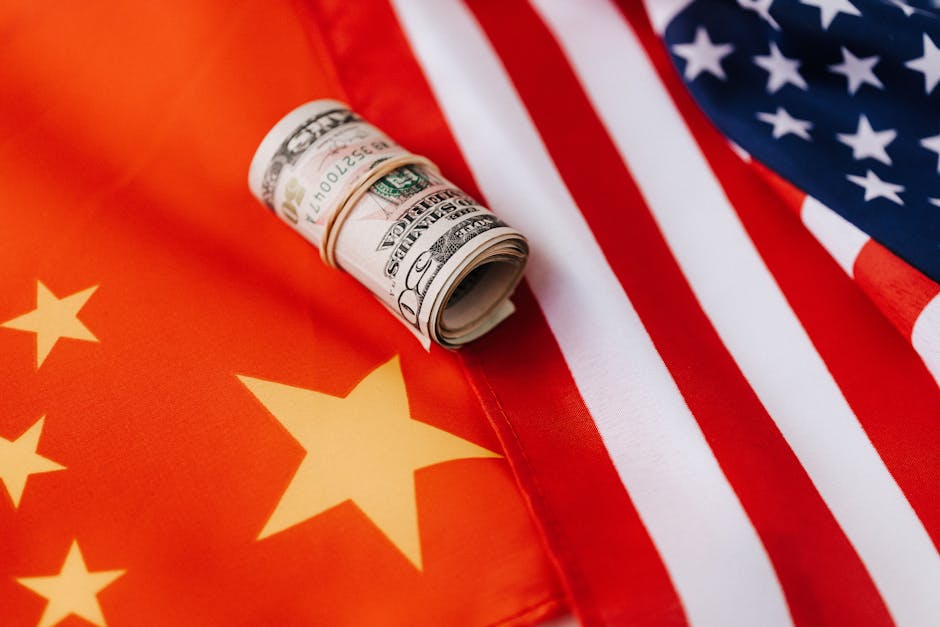
The Chip War Is Breaking the Global Economy
Everyone's treating the US-China chip war like it's some noble tech showdown. Bullshit. It's a messy, expensive brawl that's shattering the global supply chain, and nobody's winning. You think your car is expensive now? Wait till you see what happens when the world can't make enough chips because the US and China are acting like toddlers fighting over the last toy in the sandbox.
Let's cut the crap. The US started this with export controls, trying to choke off China's access to advanced chips and the machines to make them. Then China fires back by hoarding rare earths and slamming restrictions on its own exports. The result? Every factory from Taiwan to Germany is scrambling, prices are skyrocketing, and the entire supply chain is now a tangled mess of uncertainty. This isn't strategy—it's a clusterfuck.
Look at the auto industry. Cars need hundreds of chips now, from engine controls to infotainment. The shortage from the pandemic barely eased up, and now this war is keeping things tight. Ford and Toyota are still cutting production. Why? Because the supply chain was built on a globalized system where Taiwan made the most advanced chips, China assembled them, and everyone relied on that flow. Now the US wants to decouple, but you can't just snap your fingers and rebuild decades of infrastructure. It's like trying to replace the foundation of a skyscraper while people are still living in it.
And here's the real kicker: the US is pushing subsidies for domestic chip fabs, but that'll take years. Meanwhile, China is pouring billions into its own industry, even if it means making crappy knockoffs for now. The losers? Every other country that's just trying to buy chips at a reasonable price. Germany's automakers are sweating. South Korea's Samsung is stuck in the middle, because it sells to both sides. The global supply chain was supposed to be efficient, but now it's getting chopped into separate blocs. That means higher costs for everything.
You want a concrete example? Look at ASML, the Dutch company that makes the lithography machines needed for advanced chips. The US strong-armed the Netherlands into blocking sales to China. Now China can't get the best gear, so they're stockpiling older tech and pushing their own R&D. But ASML, which relied on Chinese customers for a chunk of its revenue, is losing business. The entire semiconductor ecosystem is getting twisted into knots. And guess who pays for that? Every company that buys chips ends up passing the cost to you.
This isn't about national security anymore—it's about ego. The US wants to keep its tech dominance, and China wants to prove it can't be cut off. But the supply chain isn't a weapon; it's a fragile network of trust and interdependence. When you start yanking on threads, the whole thing unravels. We're seeing stockpiling, panic buying, and long-term contracts signed at insane prices. That's not a healthy market.
My prediction? This gets worse before it gets better. The US will keep tightening screws, China will retaliate, and the global supply chain will fragment into two separate systems—one Western, one Chinese. That means less efficiency, more redundancy, and higher prices for everything from phones to medical devices. The real question is whether anyone has the guts to admit this is a losing game for everyone. Probably not. So buckle up—your next laptop might cost you a month's rent.
💬 Comments