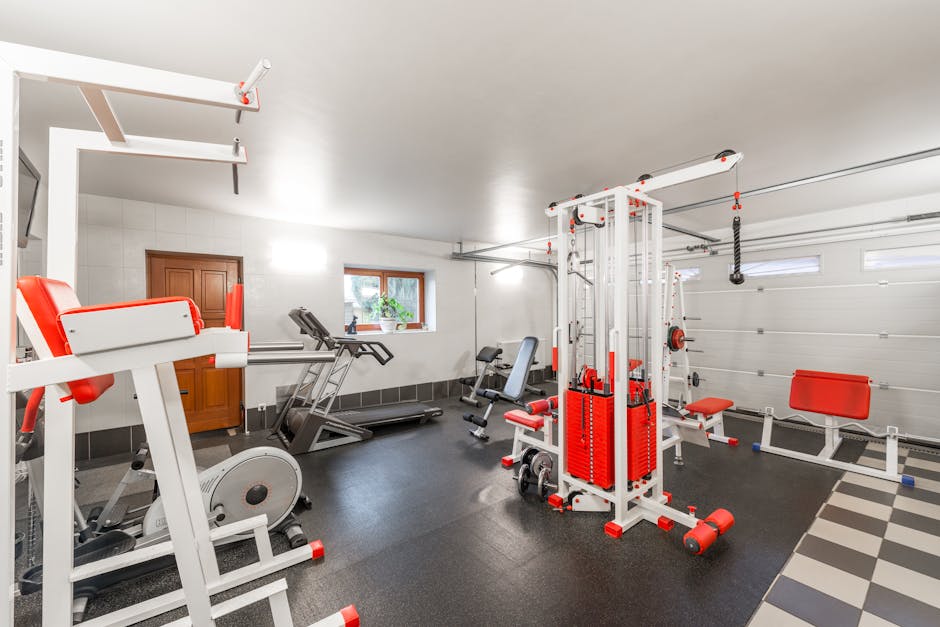
Your home gym is a money pit. Here's why.
I dropped $2,400 on a rack, bar, plates, and a bench in 2020. Thought I was being smart. No monthly fees, no driving, no waiting for the squat rack. Two years later, I sold it all for $600. The guy who bought it? Probably going to sell it too.
Everyone talks about saving money with a home gym. Nobody talks about the fact that most people quit. You're not special. The used market is flooded with barely-touched Rogue bars and half-empty plate sets from people who convinced themselves that buying equipment was the same as building discipline.
Let me run the numbers that will make your stomach drop. A standard gym membership costs, say, $50 a month. That's $600 a year. Over five years, that's $3,000. A decent home gym setup? Call it $2,000 to start, then another $400 for mats, maybe a fan, some bands, a pull-up bar that doesn't wobble. Already at $2,400. And that's if you don't buy the shiny new leg press attachment for $800. Now add the hidden costs: the floor space you sacrificed, the noise complaints from the downstairs neighbor, the time spent assembling that rack at 11 PM because you wanted to "save on delivery."
Here's the dirty secret nobody says out loud: a gym membership forces you to show up. You pay the fee, you feel the guilt if you skip. With a home gym, there's no one to embarrass you. You can walk past that rack for weeks. I did. Four months straight. The only thing getting worked out was my credit card.
And the ROI argument? Let's be honest. You're not factoring in the resale loss. Equipment depreciates like a used car unless it's a vintage York barbell you found at a garage sale. Most people take a 50% hit when they sell. So that $2,000 gym setup is really a $1,000 loss if you quit. A gym membership you cancel after a year? You're out $600. That's it.
But the anxiety doesn't stop there. You buy a home gym because you think you'll use it every day. You don't. You buy clothes you'll never wear, too. The equipment becomes a monument to your unrealized goals. Every time I walked into my garage and saw that rack, I felt a little worse about myself. It wasn't motivating. It was accusing.
Now compare that to a $50 gym membership. You walk in, you're surrounded by other people sweating, grunting, trying. That peer pressure works. You don't want to be the guy who leaves after ten minutes. You don't want to be the one who never shows up. The gym owner doesn't care if you quit, but the guy at the front desk might side-eye you if you come back after a two-month hiatus. It's not discipline. It's social friction, and it's free.
So if you're about to drop $2,000 on a home gym because you think it'll save you money, stop. Ask yourself: have you worked out consistently for six months? If the answer is no, you're buying a very expensive coat rack. The math works only if you have the discipline of a Buddhist monk. Most of us don't.
Here's my prediction: the home gym resale market is going to crash. Everyone who bought during the pandemic is going to sell. Prices will drop. And all those "save money" articles? They'll be rewritten by people who actually used their membership. The real savings isn't in the equipment. It's in showing up. And if you need a monthly fee to force that, so be it.
Or maybe you're different. Maybe you're the one in a thousand who actually uses a home gym. But if you're reading this, sweating over a $50 fee, you're not that person. Go sign up for the cheapest gym in town. Stop fooling yourself.
💬 Comments