The Hidden Economics of Costco Gas: Why It’s Cheaper and What It Means for You Today
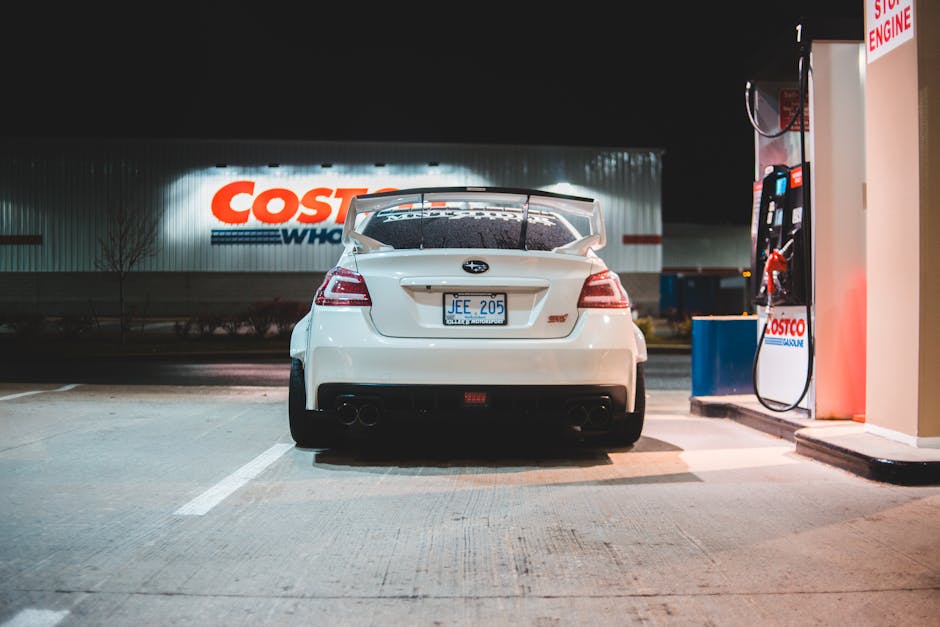
On a Tuesday morning in late February, the line at the Costco gas station in suburban Atlanta stretched twelve cars deep by 7:30 a.m. Drivers sat patiently, engines idling, as the digital price board flashed $2.89 for regular unleaded. Across the street, the Shell station posted $3.21. The arithmetic is simple, but the economics behind that 32-cent gap are anything but.
Most people think Costco sells cheap gas because it buys in bulk, like it does with ketchup and toilet paper. That’s wrong. The real story is more fascinating—and it explains why, in 2025, Costco has become the single most disruptive force in American retail fuel, forcing competitors to rethink their own pricing models.
Costco’s fuel business is not a profit center. In its most recent fiscal year, the company disclosed that gasoline sales accounted for roughly 12 percent of total revenue but contributed less than 2 percent to operating income. That ratio has held steady for a decade. The warehouse club treats fuel as a loss leader—but not in the way you think. It’s not selling gas below cost; it’s selling gas at a razor-thin margin, typically 5 to 10 cents per gallon above wholesale, compared to the industry average of 15 to 25 cents. The real profit comes from what happens when the tank is full.
When a driver pulls up to a Costco pump, they have already swiped a membership card. That annual fee—$60 for Gold Star, $120 for Executive—is the economic engine. Costco makes $4.6 billion annually from membership fees alone, and each trip to the gas station reinforces the value proposition. Fill up 20 times a year, and you’ve effectively recouped your membership cost in fuel savings alone. After that, every gallon is a psychological win, locking the customer into a virtuous loop of warehouse visits.
The result is a gravitational effect that local gas station owners have learned to dread. A 2024 study by the University of California’s Energy Institute found that within a two-mile radius of a Costco fuel station, independent gas stations reduce their margins by an average of 8 percent. Not just the day Costco opens, but permanently. The presence of a high-volume, low-margin competitor resets consumer expectations. Once you’ve seen $2.89, $3.21 feels like theft.
But here’s where the conventional narrative gets flipped on its head. Costco’s gas isn’t just cheap because of the membership model. It’s cheap because of a logistics network that rivals the U.S. military. Costco operates its own fuel distribution centers, purchasing directly from refineries and bypassing the middleman rack jobbers that supply most local stations. This vertical integration shaves off an additional 3 to 5 cents per gallon. Furthermore, the company’s fueling stations are designed for throughput, not aesthetics. The average Costco station has eight to twelve pumps, spaced wide enough to minimize maneuvering time, and a dedicated lane system that can process 150 cars per hour. That’s three times the throughput of a typical 7-Eleven.
You’d think this would make Costco vulnerable to crude oil price swings, but the opposite is true. Because Costco’s fuel margins are so thin, it can react faster to wholesale price declines. When the benchmark West Texas Intermediate crude dropped from $78 to $72 a barrel in January 2025, Costco cut its pump prices within 48 hours. Competitors took four to six days. The speed advantage has become a loyalty driver. Drivers now see Costco gas as not just cheaper but smarter—a real-time arbitrage against the rest of the market.
None of this explains the biggest Costco gas puzzle: why are the lines so long, and why do people tolerate them? Behavioral economists call it the “Veblen effect in reverse.” Normally, long lines signal scarcity and drive demand upward. But at Costco, the line signals value. Standing in a queue with thirty strangers creates a shared experience of bargain-hunting that reinforces the membership’s worth. It’s a public performance of thrift. The longer the line, the better the deal must be.
This psychological framing explains why Costco has not aggressively expanded its fuel network in 2025. It currently operates 900 gas stations across the United States, a number that has grown only 15 percent since 2020. Compare that to Wawa or Sheetz, which have doubled their locations over the same period. Costco is deliberately under-served in fuel. They want lines. They want congestion. It’s a feature, not a bug. Every minute you spend in line is a minute you are not shopping at Publix or Walmart.
For the broader economy, the implications are subtle but significant. The Federal Reserve Bank of Dallas published a working paper in late 2024 that found warehouse club gas stations—dominated by Costco—have shaved an estimated 0.2 percent off the national average price of gasoline over the past five years. That doesn’t sound like much, but multiply it by 135 billion gallons consumed annually, and it’s a $10 billion consumer surplus. In an era of stubborn inflation, Costco’s fuel pricing acts as an informal price cap on a notoriously volatile good.
The real question for 2025 and beyond is whether this model can survive the electric vehicle transition. Costco currently operates no public EV charging stations at its U.S. warehouses. The company has tested a handful in Canada, but CEO Ron Vachris stated on the most recent earnings call that "the economics of EV charging don't fit our membership model." He’s right. The margin on kilowatt-hours is far thinner than on gasoline, and the charging time—twenty minutes at best—destroys the throughput advantage. A gas customer is in and out in five minutes. An EV driver occupies a spot for four times as long, buying a fraction of the energy value.
This creates a strategic fork in the road. If electric vehicles reach 30 percent of new car sales by 2028, as many analysts predict, Costco will face mounting pressure to either build charging infrastructure—and remake its business model—or watch its fuel-driven customer acquisition engine sputter. The company’s silence on this front is telling. They are watching, calculating, and likely waiting for a technology that can match the speed of the internal combustion engine.
For now, Costco gas remains a masterclass in asymmetric competition. It’s not a fuel retailer that happens to sell memberships. It’s a membership company that uses fuel as a trojan horse. The line at the pump is a recruiting poster. The savings are the initiation fee. And every gallon sold reinforces the central bargain: you pay us for access, and we make you feel like the smartest person on the road.
What to watch next: Keep an eye on Costco’s quarterly financial disclosures for any mention of "fuel margin compression" or "charging pilot programs." If the company starts building out EV infrastructure at its existing stations, it will signal that the era of cheap gas as a core strategy is ending. Until then, the secret to Costco gas lies not in the price board, but in the membership card that precedes it.
💬 Comments