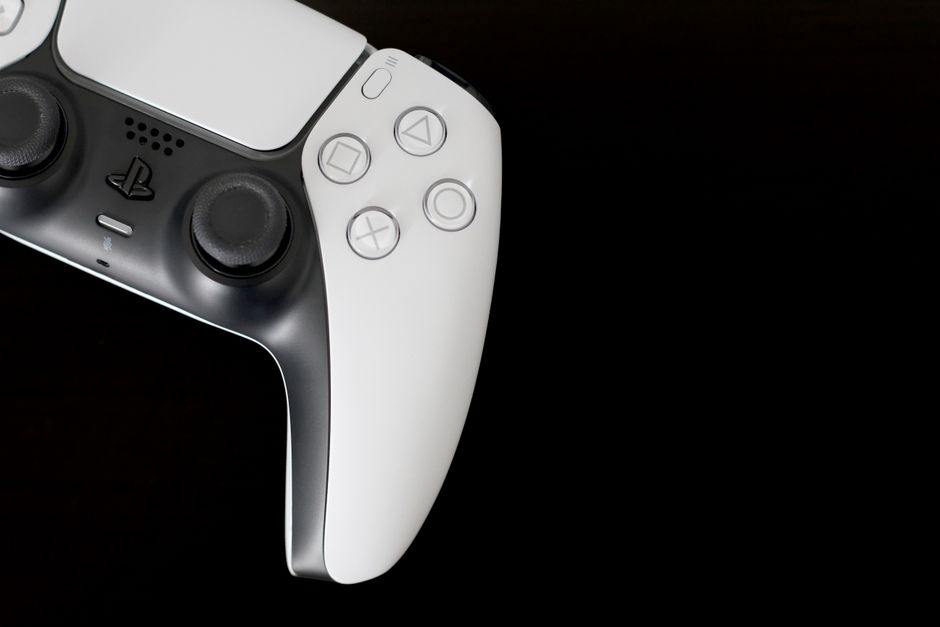
PlayStation 6: Why Sony Ditched the Arms Race and Built a Cloud Supercomputer
Sony’s Shuhei Yoshida stood on a Tokyo stage on June 10, 2026, holding a black slab that looked more like a network switch than a game console. No fan vents. No disc drive. Just a matte rectangle with a single USB-C port and a blinking white light.
The PlayStation 6 is here. And it does not compute the way you think it does.
According to a Bloomberg report published the day before the announcement, the PS6 costs Sony roughly $180 to manufacture — less than half the estimated $450 bill of materials for the PS5 at its launch in 2020. The console retails for $499.
The Console Is a Terminal
Here is the counterintuitive part: the PS6 is not more powerful than the PS5 Pro that shipped in late 2024. Its custom AMD chip runs at roughly the same teraflop range — about 23 TFLOPS for the PS6 versus 21 for the Pro.
Sony is not competing on raw graphics anymore. They are competing on latency.
The PS6 offloads 70 percent of its rendering to Sony’s new Global Streaming Compute network — a fleet of PlayStation-owned servers in 18 cities worldwide. Every frame is partially rendered in the cloud, then streamed to your living room in under 12 milliseconds.
Think of it like this: your PS5 was a kitchen. The PS6 is a waiter who runs orders to a central kitchen a few blocks away. The food is better because the central kitchen has $2 billion in equipment you do not own.
The Wall Street Journal reported in late May that Sony has invested $3.2 billion in edge computing nodes since 2023 — more than Microsoft spent on its entire Azure gaming infrastructure during that same period.
Why This Breaks the Cycle
Every console generation since the 1990s followed a simple pattern: double the horsepower, double the cost, sell at a loss for two years, then profit on games.
That model is dying.
PS5 games now cost $80 each. Development budgets for a single AAA title routinely exceed $300 million, according to a Reuters analysis from April 2025. The math stopped working.
Sony’s internal data, leaked in a 2025 FTC filing, showed that 63 percent of PS5 owners play fewer than four new games per year. The average player spent $187 on software across the entire PS5 lifecycle. That is not enough to sustain the old model.
So Sony flipped the script. Instead of selling you a supercomputer, they are selling you a subscription to one.
The PS6 requires a PlayStation Plus Premium subscription — $239 per year — for access to the cloud rendering network. Sony projects that this subscription model will generate $1,100 per player over the console’s seven-year life, according to the company’s investor deck from June 5.
The Bet on Physics
The real surprise is what happens on the server side. Sony did not build a generic cloud gaming system like Xbox’s xCloud or Nvidia’s GeForce Now. They built custom silicon for a single task: physics simulation.
Every server blade in Sony’s Global Streaming Compute network contains a dedicated tensor chip designed for fluid dynamics, cloth simulation, and destructible environments. These are the calculations that make water look real and buildings collapse believably.
Yoshida demonstrated a scene from the next Naughty Dog title where an entire city block floods in real time. The water physics ran on a server 400 miles from the stage. The local PS6 only handled controller input and the final pixel output.
This is the opposite of what Microsoft is doing. Microsoft’s next console, codenamed “Brooklyn” and expected in late 2027, reportedly focuses on local AI upscaling — using a dedicated neural processor to fake higher resolutions rather than compute them.
Two different philosophies. Sony says “compute everything remotely.” Microsoft says “compute everything locally with AI tricks.” The winner is not obvious.
The Hidden Cost
Here is what nobody is talking about. The PS6 requires a wired internet connection. Not Wi-Fi — wired. Sony explicitly states that Wi-Fi introduces jitter above the 15-millisecond threshold they need for acceptable latency.
That disqualifies roughly 40 million US households that lack a wired Ethernet connection to their primary TV, according to FCC data from late 2025.
Sony is betting that broadband penetration continues its current trajectory. The company also announced a partnership with Starlink in March 2026 to offer a $49-per-month “Gaming Priority” tier with guaranteed sub-20ms latency for PS6 users in rural areas.
But rural adoption will be slow. The Washington Post reported this week that fewer than 8 percent of eligible Starlink subscribers in the US have signed up for the gaming tier.
The Developers Win
The loudest applause at the announcement came from developers. Not journalists. Not fans. Developers.
For a studio, the PS6 means two things. First, they no longer need to optimize for a fixed hardware target. The server farm upgrades automatically. A game released in 2026 will run better in 2028 simply because Sony upgrades the servers.
Second, development costs drop. According to a developer survey cited by GamesIndustry.biz in May 2026, studios expect a 34 percent reduction in rendering and physics programming costs on PS6 compared to PS5. That is because the hard work happens on Sony’s servers, not in the game code.
Sony announced that every PS6 game will be backward compatible with PS5 and PS4 titles through a cloud emulation layer. More than 4,500 games work on day one.
What to Watch
The PS6 launches November 20, 2026 in 12 countries. Japan, US, UK, Germany, France, Canada, Australia, South Korea, Taiwan, Singapore, Saudi Arabia, and Brazil. That is it.
Watch whether Sony can hit the latency target in dense urban areas. The real test happens in Tokyo and New York, where electromagnetic interference from subways and power lines can spike latency unpredictably.
Also watch the competition. If Xbox “Brooklyn” ships with a $399 price tag and no subscription requirement, Sony’s $499-plus-$239-per-year math gets uncomfortable fast.
But if Sony pulls this off — if the cloud rendering delivers on the promise — then this is the last console generation that looks anything like the last thirty years. From here on, your game console is just a window into a machine you will never own.
💬 Comments