Mars or Bust: SpaceX 2026 Update Will Make You Sweat
The landing pad is a crater of frozen carbon dioxide. The crew will spend eight months in a tin can with more radiation than a Chernobyl tour. And Elon Musk just said the first Starship to Mars lifts off in 2026 — or we all die bored on a dying planet. This isn’t sci-fi. It’s a suicide mission with a 50% chance of making history.
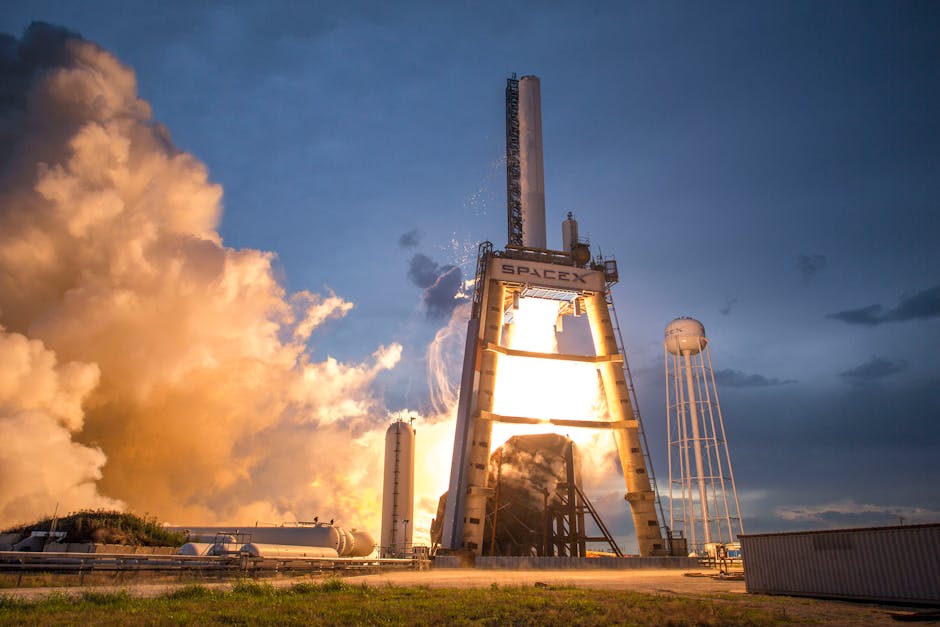
Let’s nail the timeline. Musk’s latest tweet — yes, I’m citing a tweet because that’s where humanity’s space policy lives now — claims the first uncrewed Starship will launch to Mars in the 2026 transfer window. That’s a 26-month cycle that opens every 26 months. Miss it? You wait until 2028. SpaceX has already stacked seven Starship prototypes in Boca Chica, Texas, and they’re welding fins on the eighth as you read this. The FAA? Still shuffling paper. The rocket? It’s not the problem. The problem is getting that thing to land without creating a new crater.
Every Tesla on the road, every Starlink dish on your roof — they all exist to fund this one obsession. But here’s the part that’ll keep you up at night: Starship needs orbital refueling. Think air-to-air refueling for a fighter jet, but with super-chilled methane and liquid oxygen in the vacuum of space. SpaceX has to launch 10 tanker flights for every Mars-bound Starship. That’s 10 docking maneuvers in orbit, each one a potential fireball. One wrong valve, and you’ve got a cloud of debris that’ll rain down on the Gulf of Mexico. Musk says it’s a “highly iterative” process. Translation: we’ll blow up a few before we get it right.
And the crew? If the uncrewed mission lands intact in 2026, the first humans go in 2028. Eight months in zero gravity, sealed in a hull with the same radiation shielding as a beach umbrella. NASA’s data from the Mars Science Laboratory shows that a trip to Mars exposes astronauts to over 1,000 millisieverts of radiation — that’s 20 times the annual limit for a nuclear worker. Cancer? Guaranteed. But Musk’s answer is: “You want to live on Earth forever?” He’s not wrong. Earth is a closed system with a single climate and a single biosphere. One asteroid, one supervolcano, one AI gone rogue, and the game’s over. Mars is the backup drive.
Let’s talk money. SpaceX has burned through $15 billion on Starship so far. The Mars mission alone could cost $100 billion — and nobody’s cutting that check but Musk and a few venture capitalists who think they’re buying a ticket to Valhalla. The U.S. government? Congress is still arguing about the Space Launch System, a rocket that costs $4 billion per launch and flies once a year. Starship is cheaper per ton to orbit, but the total bill for Mars is still a black hole. If Musk’s Tesla stock crashes, if the Starlink IPO fizzles, if the FAA grounds Starship for a year — it all collapses.
But here’s the gut punch: this is the only plan that exists. NASA’s Artemis program is going to the moon again — a place we already visited 50 years ago. China’s sending robots to Mars, but their human program is a decade behind. Russia is a gas station with nukes. The private sector? Blue Origin is still building a toy rocket. Virgin Galactic is a tourist trap. SpaceX is the only entity on Earth that’s actually building something that can leave this gravity well and not come back.
So the 2026 update is this: it’s happening. It’s terrifying. It might fail. But if it works, the first bootprint on Mars won’t be from a NASA astronaut. It’ll be from a SpaceX engineer who signed a waver and said, “I’d rather die trying than live wondering.” The clock is ticking. The window closes in 24 months. Start sweating.
💬 Comments