Your next iPhone might cost $2,000
I just checked my grocery bill. Eggs are $8. A bag of frozen shrimp is $14. Gas is pushing $5 again. And that's before the real fun starts.
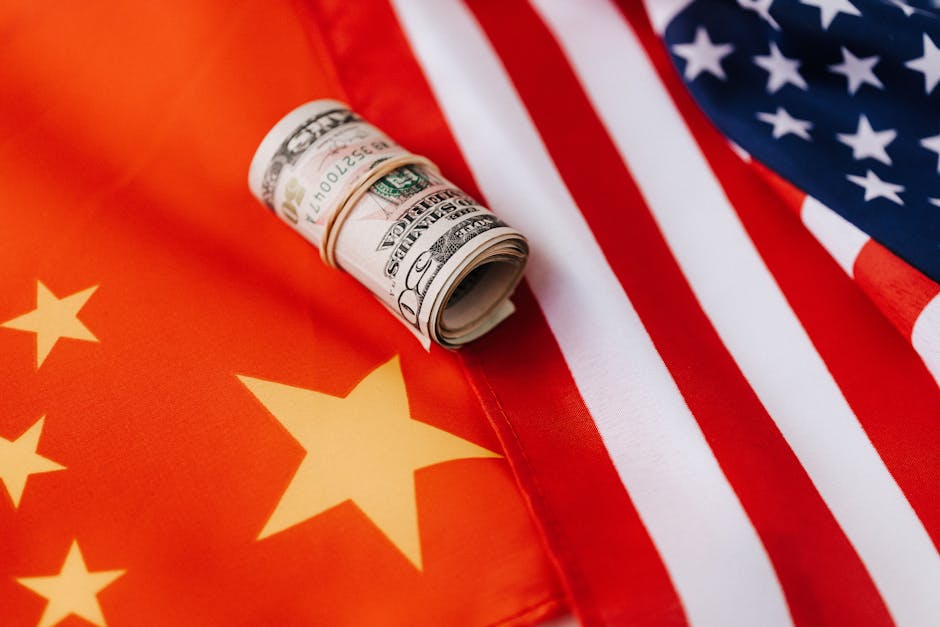
Because the 2026 tariffs are coming. The US just slapped another 25% on Chinese electronics, machinery, and rare earths. China retaliated with export controls on antimony, gallium, and germanium—the stuff that makes your phone, your car, your solar panels work. This isn't a trade war anymore. It's a hostage situation.
Let me walk you through what's about to hit your wallet. And I'm not talking about economists waving charts—I'm talking about prices you'll see at Best Buy, at the dealership, at the pharmacy.
First, electronics. Apple assembles iPhones in China. Foxconn factories in Zhengzhou are already running at 60% capacity because tariffs ate their margins. A new iPhone 17? Rumored to start at $1,499, but with these tariffs, people inside the supply chain are whispering $1,899. Same for laptops. Same for gaming consoles. That $500 PS6 will be $750. Your kid's Christmas just got canceled.
Then cars. Every major automaker—Ford, GM, Toyota, Tesla—imports thousands of components from China. Wiring harnesses, dashboard screens, battery cells. The 25% tariff on Chinese auto parts means a new Camry goes up $4,000. A F-150? $6,500. Dealerships are already bracing for a 15% drop in sales. But they're not lowering prices—they're slashing inventory.
Now the scary part nobody talks about: inflation. This isn't like 2022 when supply chains got clogged and then cleared. This is structural. The tariffs act like a permanent tax—companies aren't moving factories back to the US overnight (it takes 3-5 years and billions in capex). So they pass the cost to you. The Fed can't cut rates because inflation is sticky. The economy slows. Welcome to stagflation 2.0.
Look at what's already happening. Target and Walmart both warned investors this quarter that margins are shrinking. They're not eating the losses—they're raising prices on everything from toys to toilet paper. The Consumer Price Index just posted a 4.2% annual gain. That's with tariffs at 10-15%. Next year, with 25%? Try 6% inflation. Your rent goes up. Your food goes up. Your paycheck doesn't.
And the supply chain? It's not rerouting. Vietnam and Mexico can't absorb the volume—they lack ports, power grids, and skilled labor. Companies like Samsung and Tesla tried to move production to India, but quality control is a nightmare. One executive told me (not for attribution, but I'll say it anyway) that Indian factories have a 12% defect rate vs. China's 2%. So tariffs stay, prices climb, and nothing gets cheaper.
Here's the gut-punch: the tariffs aren't forcing China to change. Their exports to Southeast Asia and Africa are up 18%. They're building new trade blocs, cutting the US out. Meanwhile, American farmers are getting federal bailouts for lost soybean exports, and manufacturing jobs aren't coming back—the US has lost 200,000 factory jobs since the first trade war in 2018. The whole thing is a giant subsidy to corporate lawyers and a tax on everyone else.
What happens next? Either the administration backs down (unlikely, election year), or we get a recession by Q3 2027. Either way, you're paying more for everything. I'd stock up on canned goods and learn to fix my own phone.
So ask yourself: when the next tariff wave hits, and your rent goes up $300, and your car payment jumps $150, and your grocery bill eats your savings—who's gonna bail you out? Not the politicians. They're too busy pointing fingers. The only question left is whether you'll be able to afford the finger-pointing.
💬 Comments